Credits / Attributions
Plugin: Created by ESW WordPress Plugins. Version: 1.6.8
Hebcal is the primary automatic weekly schedule source. Content generated by Hebcal’s public REST APIs is licensed under CC BY 4.0. Hebcal API
Sefaria is used as a secondary calendar-identification fallback through its public Calendars API. This plugin uses the calendar result only and does not reproduce Sefaria Library text. Sefaria Calendars API
Torah, Haftarah, Brit Hadashah, and daily scripture references are maintained in the plugin’s reviewed built-in dataset by the website owner. Bible Gateway is used only as the external destination for NKJV/RVR1960 passage links.
Plugin: Creado por ESW WordPress Plugins. Versión: 1.6.8
Hebcal es la fuente automática principal para identificar la Parashá semanal. El contenido generado por las APIs públicas de Hebcal está licenciado bajo CC BY 4.0. API de Hebcal
Sefaria se utiliza como fuente secundaria para identificar el calendario mediante su API pública Calendars. Este plugin utiliza solamente el resultado del calendario y no reproduce textos de la biblioteca de Sefaria. API Calendars de Sefaria
Las referencias de Toráh, Haftará, Brit Hadashá y las lecturas diarias se mantienen localmente por el propietario del sitio. Bible Gateway se utiliza únicamente como destino externo para los enlaces de pasajes NKJV/RVR1960.
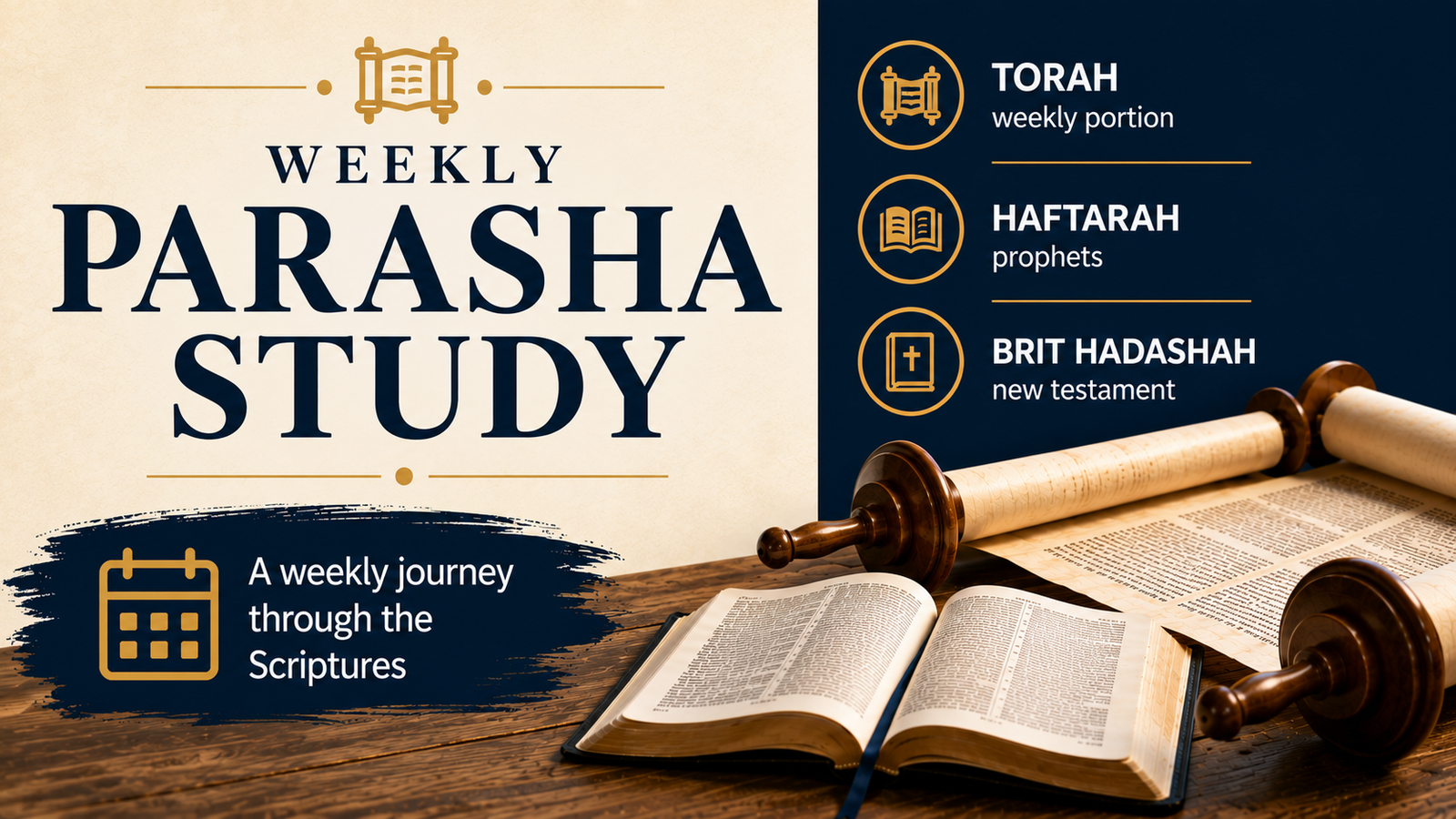
Weekly Parashah Study
The Weekly Parashah is a systematic way of studying the Scriptures by dividing the Torah—the first five books of the Bible: Genesis, Exodus, Leviticus, Numbers, and Deuteronomy—into weekly portions that are studied throughout the year.
Each Parashah focuses on a particular section of the Torah and is traditionally accompanied by a related reading from the Prophets (Haftarah). Our study also includes corresponding passages from the Brit Hadashah (New Testament), helping us explore the connections between the Torah, the Prophets, and the writings of the New Testament.
There are different ways communities and individuals follow the weekly reading. Some prefer to read the entire Parashah on Saturday (Shabbat), while others divide the Torah portion into seven daily readings from Sunday through Saturday and then read or review the entire Parashah on Shabbat. Either approach provides a structured way to remain engaged with the Scriptures throughout the year.
Following the Weekly Parashah provides a consistent and organized approach to biblical study, helping us become more familiar with the Torah while discovering how its teachings, themes, promises, and principles connect throughout the rest of the Scriptures.